Bethlehem City Directory Collections
The Bethlehem Area Public Library, or BAPL, is the main local-history starting point. Its 2023 House Research Guide says the Bethlehem Room holds Greater Bethlehem city directories from 1895 to the present under Local History 917.48. The run is deep, but it does not promise an edition for every year. The guide identifies useful early Sholes' Directory of the Bethlehems volumes for 1900-01, 1904, 1906, 1911, and 1917-18, followed by volumes titled Directory of the Bethlehems and later Polk Directory.
| Directory collection | Verified years | Where held | Access route |
|---|---|---|---|
| Bethlehem Room city directories | Greater Bethlehem, 1895-present | BAPL Main Library | Historical shelf, Local History 917.48 |
| Sholes' Directory | 1900-01 and named later volumes | BAPL microfilm and Lehigh project | Microfilm or online project results |
| Historic Bethlehem directories | Late 1800s to mid-1900s | Historic Bethlehem collections | Written inquiry or consultation |
| Federal census | 1790-1950 released | BAPL and library databases | HeritageQuest, microfilm, or in-library access |
BAPL is at 11 W. Church Street and provides a staff research-service option for people who cannot visit. Historic Bethlehem is a useful second shelf when an edition is missing or unavailable. Its collection locations include the Kemerer Museum at 427 N. New Street and Luckenbach Mill at 459 Old York Road. Its inquiry process asks for a surname, topic, known facts, and sources already consulted.
Reading Bethlehem's Sholes Directory
The Lehigh Beyond Steel project makes the 1900-01 Sholes directory particularly useful. It connects directory material with selected 1900 Census data and Sanborn maps. Results can lead to a scanned primary-source page, and an address result can return people known at that address. The scan matters because it preserves spelling and context instead of presenting only a database result.
Open the Beyond Steel GIS project to see the official source route for its historical material.
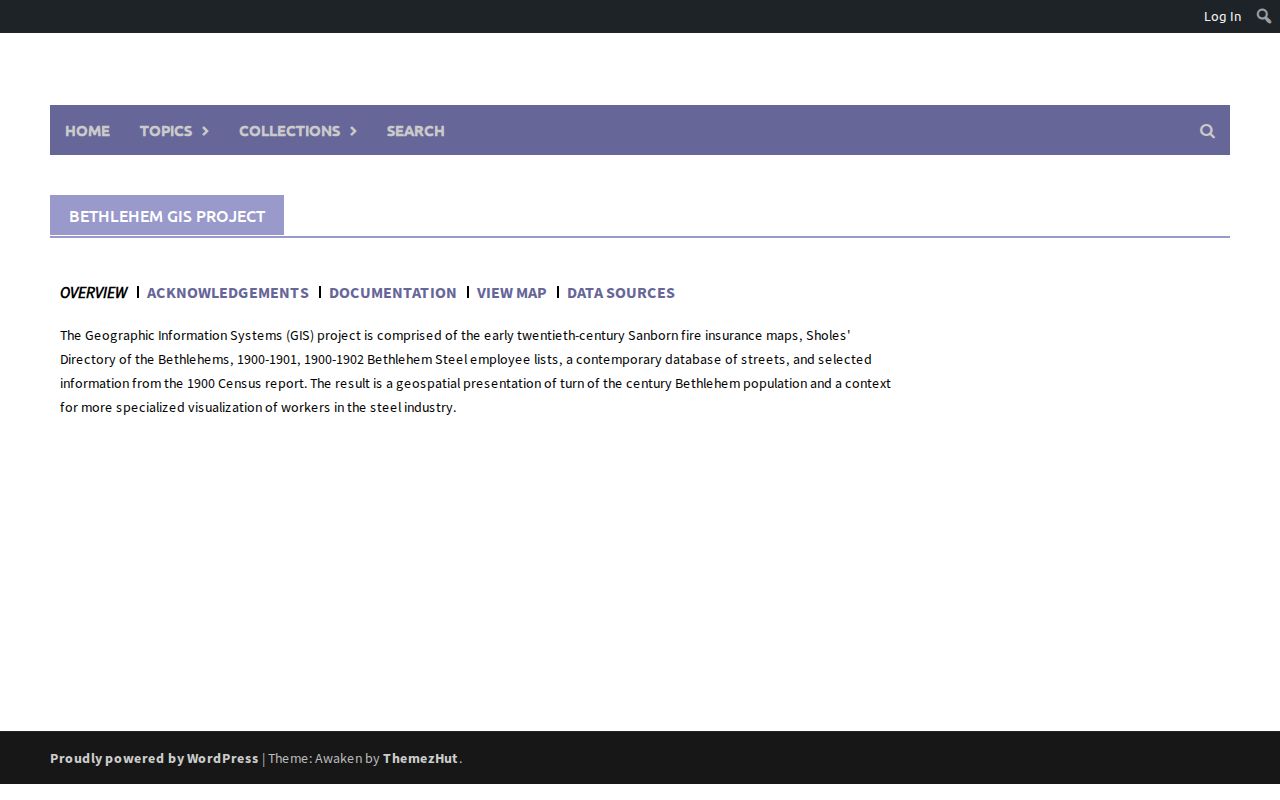
Do not make a name match into an identity match. Beyond Steel describes nine people named Charles Smith in the local directory. A middle initial, address, business reference, and date are the checks that keep a same-name result from becoming the wrong household. The project also explains that it can map a 1900 location even where a later Sanborn map uses a different street name.
How a Bethlehem Directory Entry Works
BAPL confirms that the directory holdings can supply an individual's name, address, and business name. The exact edition controls what else appears. Read the full entry and the volume's own key before expanding an abbreviation. Research did not verify a complete local abbreviation key, owner mark, spouse convention, or a consistent criss-cross run, so none should be borrowed from another city or year.
| Personal name | Keep the spelling and middle initial exactly as printed. |
|---|---|
| Street address | Record the number and street as printed, not a later normalized form. |
| Business information | Use it as a time-and-place check when the volume supplies it. |
| Source page | Save the page image or a complete citation for later checking. |
- Directory entry
- A printed listing for a person, address, or business in one edition, not a continuous record.
- Criss-cross directory
- An address-ordered directory, when a particular edition includes one. Check the book rather than assuming it does.
- Householder
- The person listed for a household. It does not establish every person who lived there.
- Abbreviation key
- The publisher's explanation of shorthand. Use the key from the same volume before interpreting marks.
Bethlehem Directory Addresses on Maps
An older printed address is more useful when paired with a map from the same period. BAPL holds Sanborn maps for 1885, 1892, 1897, 1904, and 1912, plus a modified 1912 edition. The Library of Congress provides a public 1892 sequence. These maps can show a street pattern, building footprint, use, and boundary in that edition. They do not name residents or prove a continuous ownership trail.
The address must also be read in its municipal-era form. Five municipalities merged into the City of Bethlehem in the 1917-18 transition, and Northampton Heights joined in 1920. BAPL preserves cataloged public microform for old Borough of Bethlehem, South Bethlehem, West Bethlehem, Northampton Heights, and City records. Keep the printed municipality, street name, number, and parcel description in notes. A modern Bethlehem address can hide a South Bethlehem or West Bethlehem record.
Bethlehem Directory Names in Newspapers
A directory gives a short dated listing. A local newspaper can supply the context that the line does not carry, such as an organization, relative, corrected spelling, business detail, or death notice. BAPL's Bethlehem Globe-Times and Express-Times index is an incomplete index of marriage, death, and other biographical articles. Older citations commonly give a page and column, while later ones can give section, page, and column. Treat that citation as a retrieval instruction, not as the full story.
The library also announced a useful later-period digital channel in September 2024. All 42 issues of the 1993-94 Bethlehem Star and weekly Bethlehem Press issues from January 20, 2010 through August 2, 2023 were digitized for browsing and search. These dates do not replace the older Globe-Times microfilm or index. They give a separate reporting layer that can be matched to a known directory address or household date.
Keep the directory edition and article citation together. If an article gives a street, compare it with the closest directory and map rather than assuming it describes the same person. The city had historically distinct South Side, West Side, and downtown areas, and both familiar names and old address forms can collide. An article's date, page, names, and place details are valuable corroboration.
Trace a Bethlehem Directory Household
Work forward and backward from a narrowly dated listing. The useful result is a small chronology of source-backed appearances, not a guess about when someone arrived or left. Pair a directory with the closest released federal census. BAPL notes local Lehigh and Northampton census microfilm from 1790 through 1920 and library database access through 1950, following the federal 72-year release rule.
- Choose the edition nearest the address or event and transcribe the name, initial, address, and business detail.
- Check the prior and next available directory editions. A first appearance brackets a date but does not prove a move or construction date.
- Compare the closest released census for household relationships, ages, and birthplace fields, keeping the address and identity tests separate.
- Use BAPL's newspaper index to locate an obituary or biographical article by date and page, then retrieve the article.
- For estate or land changes, use the correct county's Register of Wills or Recorder rather than treating a directory as title evidence.
Lehigh County was created from Northampton County in 1812. A very old Bethlehem record may therefore sit in Northampton-era material even if the modern parcel is on the Lehigh side. That split, plus later street changes, is why one unchanged spelling should not be expected across a long historical trail.
Check Bethlehem Directory Matches
Use several details before attaching a printed name to a family line. Begin with the exact address, then compare the middle initial, business information, nearby edition, and a census or newspaper result. A directory may omit a person, preserve an old address, or use a form of a name that differs from another record. Its absence does not prove a person was not in Bethlehem.
The same discipline matters near the county boundary. West Bethlehem is in Lehigh County and South Bethlehem is in Northampton County in the City's census-neighborhood description. When an address-related estate, deed, or court record becomes necessary, verify the parcel or underlying record's county rather than relying on a Bethlehem mailing line. Keep a citation for every edition used, including title, edition year, page, and repository. That record makes it possible to revisit a conclusion when an alternative spelling, source image, or map later changes the interpretation and the historical address timeline.
Bethlehem City Directory Research Desk
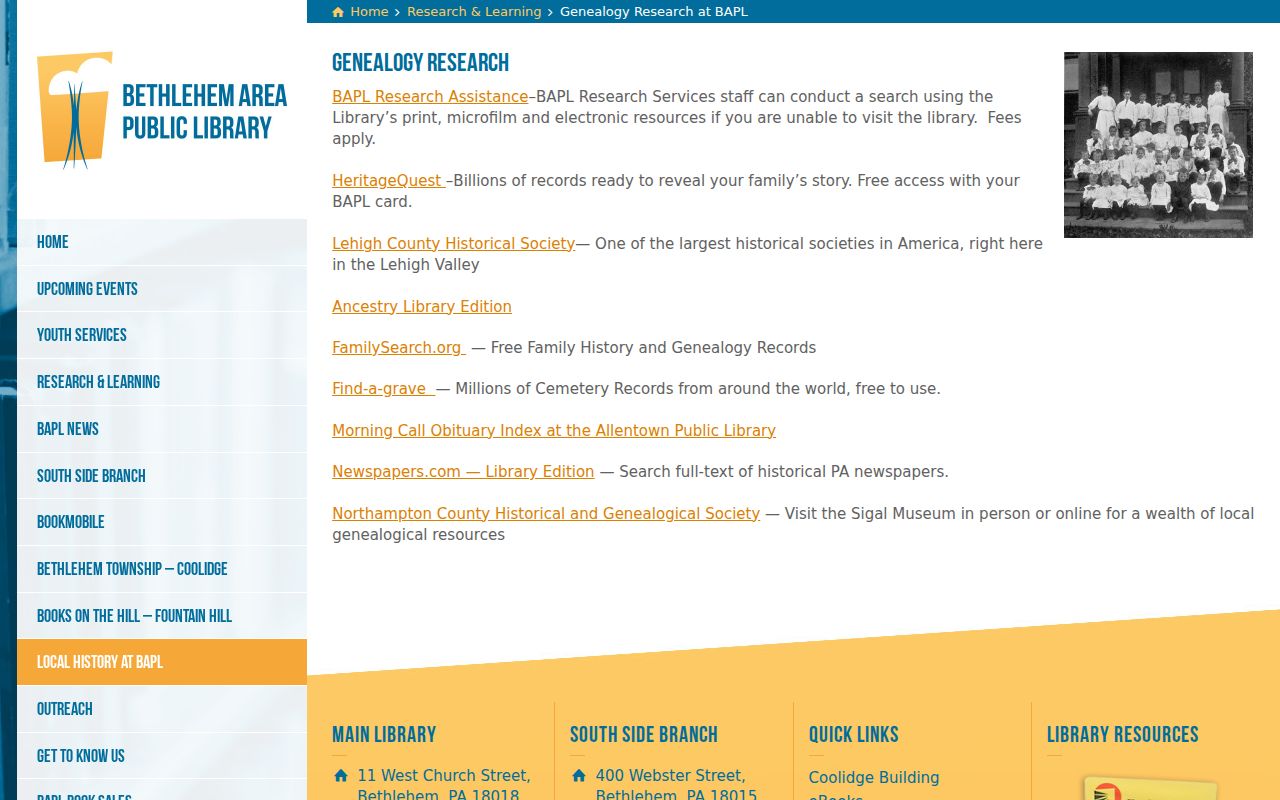
The BAPL genealogy service brings together the Bethlehem Room, FamilySearch, HeritageQuest, in-library Ancestry Library Edition, Newspapers.com Library Edition, local societies, and an Allentown obituary index. Its brochure describes more than 5,000 bound items, 1,000 microfilm rolls, 25 archival collections, and hundreds of images and postcards. Those are complementary channels, not interchangeable search results.
The library genealogy page is the official lead-in for Bethlehem Room research options.
Historic Bethlehem holds late-nineteenth- through mid-twentieth-century city directories, early maps, and documents, and offers research consultations. The alternate collection is valuable when the library shelf has a gap.
Historic holdings and inquiry details appear on the Historic Bethlehem collections page.